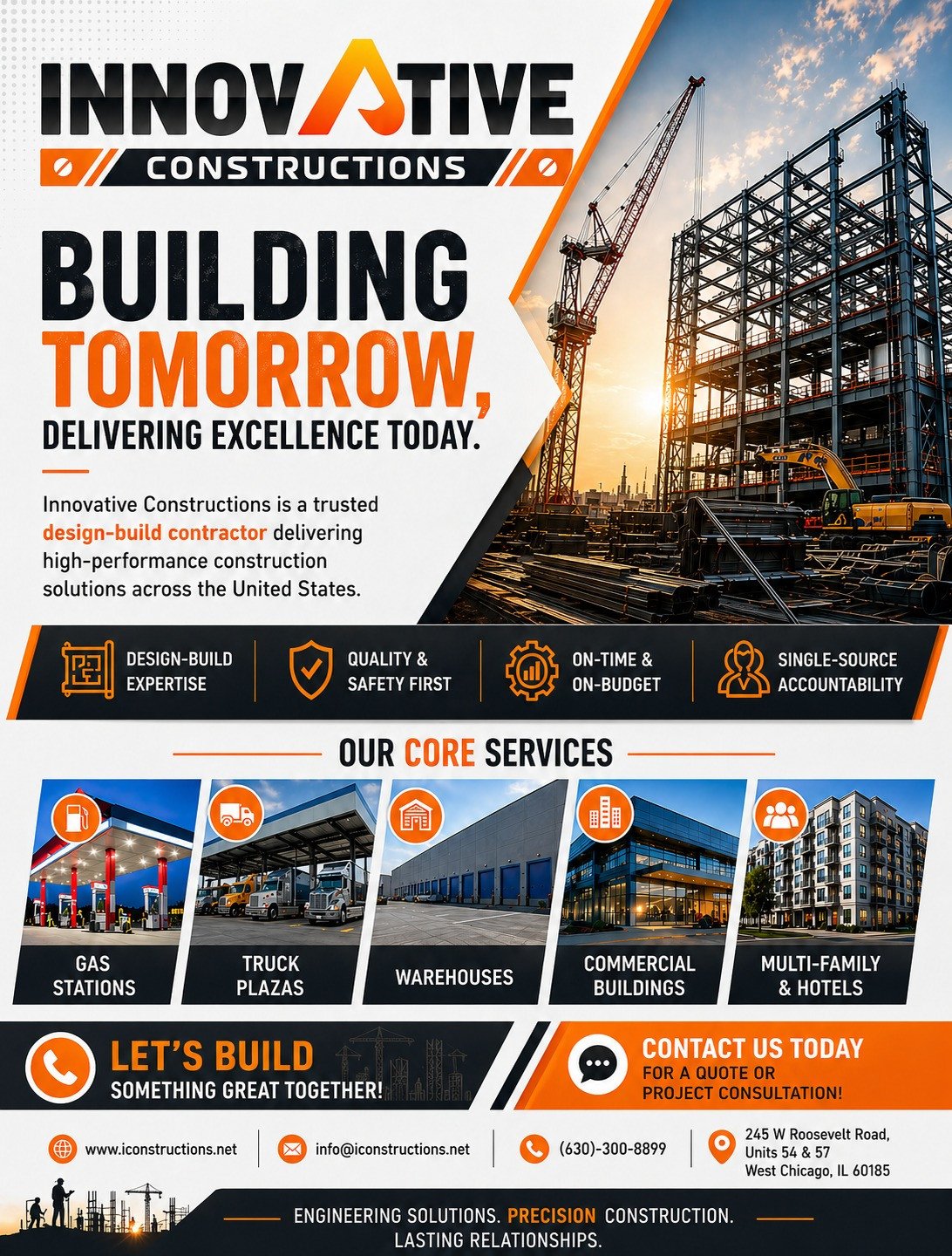
The Gas Station of the Future: How Innovative Construction is Fueling Change
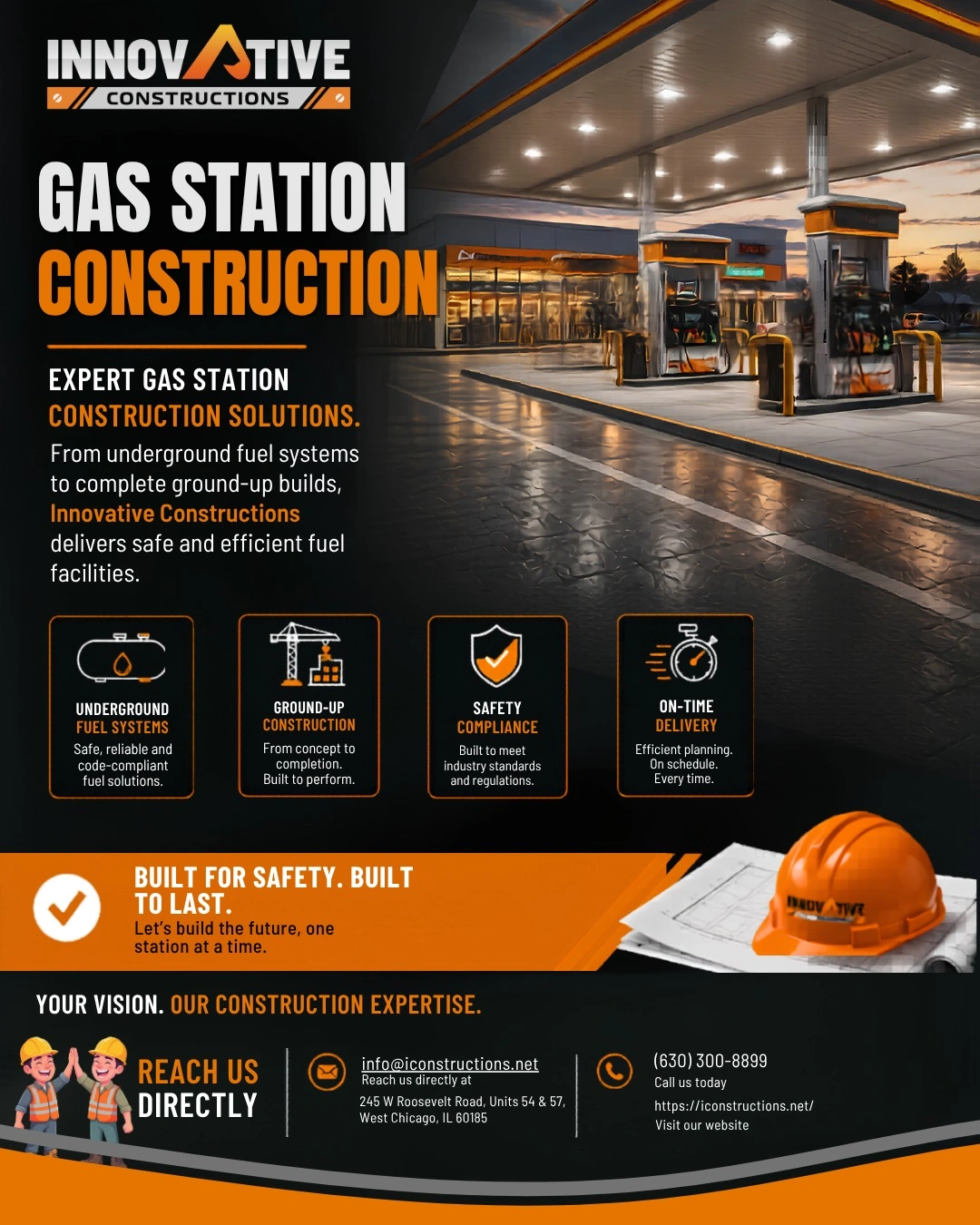
For decades, the standard gas station has been purely utilitarian: a concrete slab, a steel canopy, a few pumps, and a small convenience store. But as the automotive industry undergoes a massive transformation, so too is the infrastructure that supports it.
Today’s gas stations are evolving into modern, multi-service energy hubs. Driven by the rise of electric vehicles (EVs), stricter environmental regulations, and shifting consumer expectations, construction companies are reimagining what a fueling station can be.
Here is a look at the innovative construction trends redefining the modern gas station.
1. Modular and Prefabricated Construction
One of the biggest shifts in gas station construction is the move away from traditional stick-built methods toward modular and prefabricated designs.
- Speed to Market: Entire canopies, convenience store sections, and even underground tank housing can be built in climate-controlled factories and shipped to the site. This drastically reduces on-site construction time, allowing operators to open faster.
- Reduced Waste: Factory precision means less material waste and a smaller carbon footprint during the building phase.
- Scalability: Modular designs allow station owners to easily expand their footprint or add new services—like an expanded cafe or more EV bays—without tearing down the existing structure.
2. Designing the "Hybrid Hub"
As the market shifts toward electric vehicles, gas stations are no longer just for gas. Construction now must accommodate a hybrid model that serves both combustion engines and EVs.
Because EV drivers spend more time at a station waiting for their cars to charge (often 15 to 30 minutes), the physical layout is changing to prioritize the customer experience. Construction teams are building upgraded driver lounges, integrating full-service restaurants, and designing outdoor seating areas with Wi-Fi and green spaces to make the "dwell time" comfortable and profitable.
3. Sustainable and Eco-Friendly Materials
The environmental impact of fueling stations is heavily scrutinized, prompting builders to incorporate green construction practices from the ground up.
- Solar Canopies: The massive flat roofs of traditional gas station canopies are being reinforced and transformed into solar farms. These solar panels can generate enough electricity to power the station's lighting, pumps, and store, effectively taking the station off the grid.
- Permeable Paving: To combat harmful chemical runoff, modern stations are utilizing permeable asphalt and concrete. This allows rainwater to filter through the ground naturally, often passing through built-in bio-filtration systems before hitting local waterways.
- Green Roofs and Living Walls: To combat the "concrete jungle" aesthetic and regulate building temperatures, some high-end stations are incorporating vegetation directly into the architecture.
4. Smart Tech Integration
The gas station of the future is built with a digital nervous system. Construction now involves embedding Internet of Things (IoT) technology directly into the infrastructure.
- Smart Sensors: Leak detection sensors are being built into double-walled fiberglass underground storage tanks to monitor fuel levels and environmental safety in real-time.
- Automated Energy Management: Smart HVAC and LED lighting systems are wired to adjust automatically based on foot traffic and natural light, drastically reducing energy consumption.
The Road Ahead
The days of the grimy, purely functional pit stop are coming to an end. Through modular building, sustainable materials, and a focus on the customer experience, innovative construction is turning gas stations into community energy hubs. As the way we drive continues to change, the spaces we build to keep us moving are becoming smarter, greener, and more welcoming than ever before.
Are you planning a commercial build or renovation? Embracing these construction innovations not only future-proofs your business but can significantly reduce long-term operational costs.

0 Comments
No comments yet. Be the first to share your thoughts!
Leave a Comment