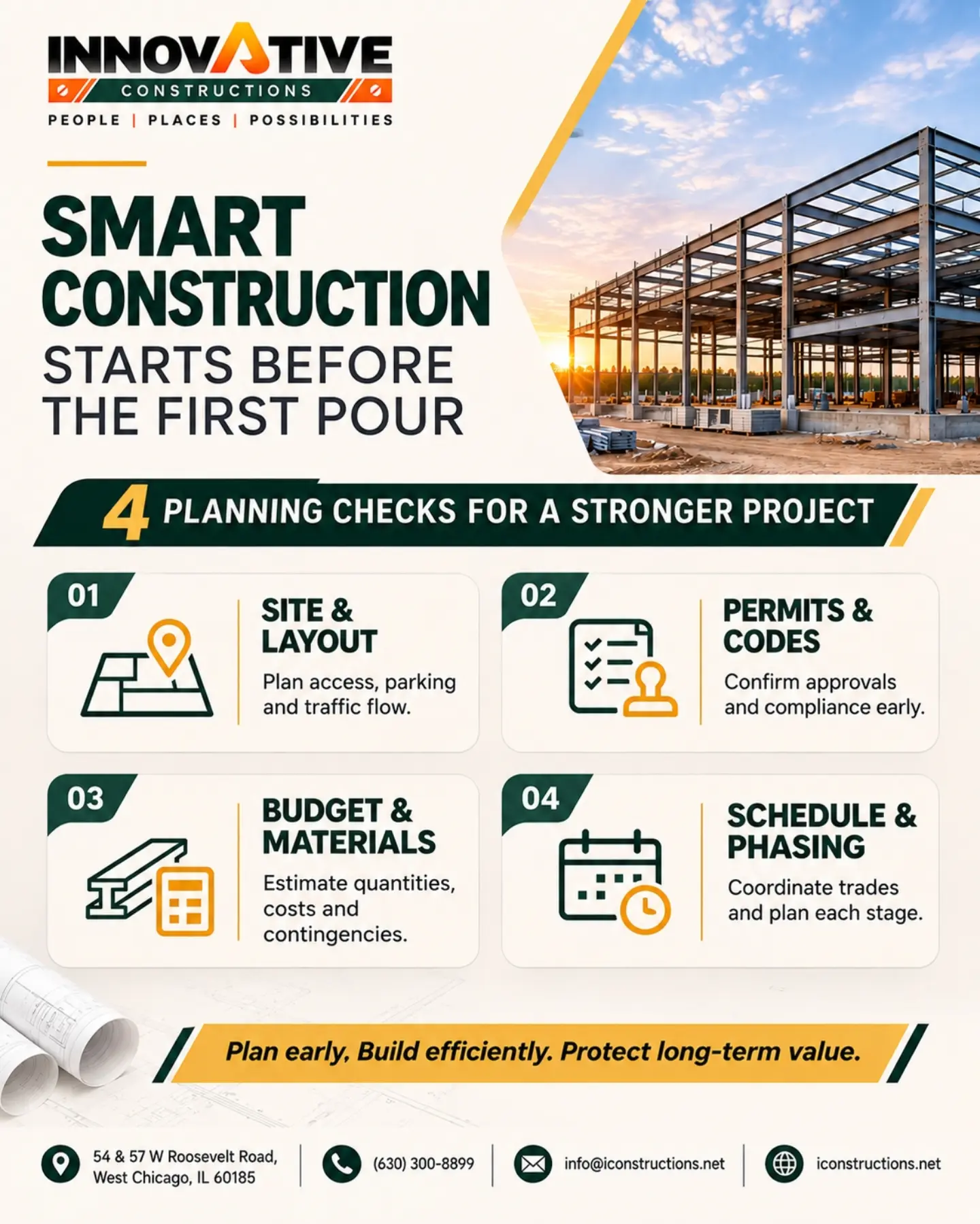
Smart Pre-Construction Planning Starts Before the First Pour
A successful commercial build starts long before the concrete is mixed. Effective pre-construction planning is the cornerstone of any successful project, ensuring you plan early, build efficiently, and protect long-term value. Whether you are developing a new warehouse, travel center, or retail space, mastering these initial steps prevents costly delays and sets the stage for a structurally and financially sound development.
4 Planning Checks for a Stronger Project
1. Site & Layout Assessment Before any physical work begins, rigorous pre-construction planning demands a comprehensive site analysis to plan access, parking, and traffic flow. Evaluating existing conditions helps identify potential constraints early in the process. Proper logistics planning ensures that materials can be delivered efficiently and crews have adequate staging areas, which is especially critical when managing a tight commercial construction site.
2. Permits & Codes Compliance Navigating local regulations is mandatory to confirm approvals and compliance early. Commercial builders frequently face complex local zoning laws and environmental approvals. Securing the correct permits prevents work stoppages and ensures the building will be safe. Integrating permit approval timelines proactively prevents bottlenecks, and adhering to rigorous industry safety and compliance standards keeps the project moving smoothly.
3. Budget & Materials Estimation Accurate financial forecasting requires teams to estimate quantities, costs, and contingencies. A detailed cost model evaluates materials, labor, equipment, and permit fees. Thorough pre-construction planning in this phase allows for value engineering, identifying the most cost-effective alternatives while maintaining a realistic contingency fund to protect your margins from unforeseen site challenges.
4. Schedule & Phasing Coordination A master timeline is essential to coordinate trades and plan each stage of the build. By breaking down the project into manageable phases, project managers can estimate task durations based on labor availability and material delivery times. Developing a detailed schedule during the pre-construction planning phase reduces downtime and prevents costly site congestion.
Frequently Asked Questions (FAQ)
1Q: What is pre-construction planning?
1A: Pre-construction planning is the vital preliminary phase of a project where contractors evaluate the site layout, secure permits, estimate budgets, and establish schedules before any physical building begins.
2Q: Why is it important to confirm permits early in a construction project?
2A: Confirming approvals and compliance early prevents legal delays, avoids costly work stoppages, and ensures the project strictly adheres to all local building codes.
3Q: How does early planning affect the overall project budget?
3A: Dedicated planning helps accurately estimate quantities, costs, and necessary contingencies, which protects long-term value and prevents unexpected budget overruns once construction is underway.
Partnering with experienced professionals ensures these four pillars are executed flawlessly. To explore how expert management can streamline your next build, reach out to the team at Innovative Constructions to discuss your pre-construction planning needs and parameters today.
0 Comments
No comments yet. Be the first to share your thoughts!
Leave a Comment